Anticipating and Planning for the Full Product Lifecycle
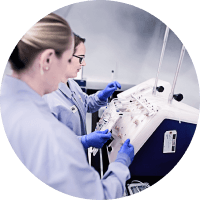
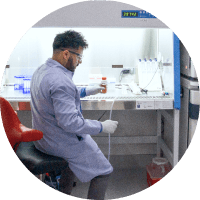
We build in scale-up, automation, and transfer-readiness from the first unit operation. A process designed with this approach is far less likely to fail when it transitions from the bench to scale, or from scale to tech transfer. Every process decision is rational and justified by data, by precedent, or by both.
Method Built to Scale and Transfer, From the First Unit Operation
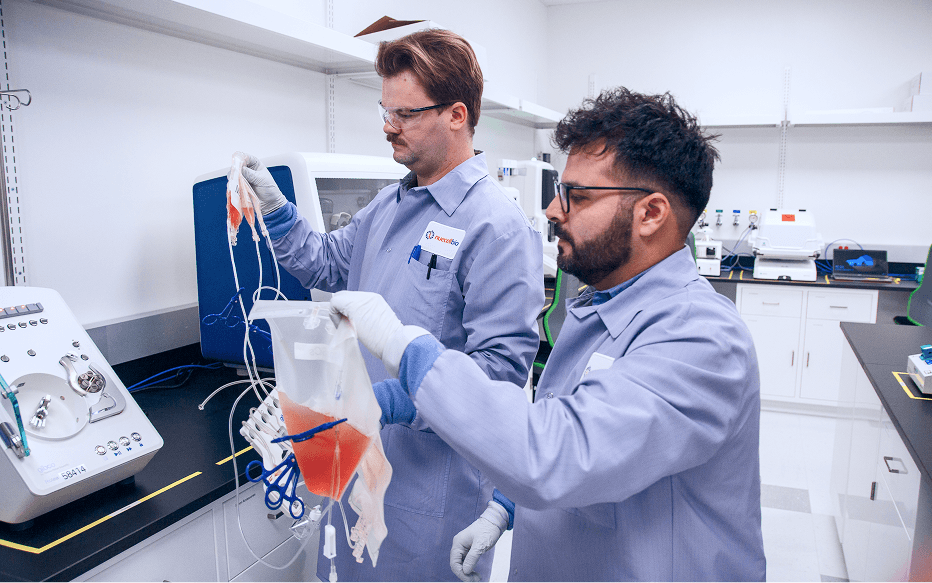
Critical parameter identification, DoE-driven optimization, and process characterization across each unit step — selection, activation, gene delivery, expansion, harvest, formulation, and fill. Each unit operation is evaluated against published best practices and our internal performance database, then stress-tested within the equipment’s operating edge to establish proven acceptable ranges and edge-of-failure boundaries. Analytical strategy is built in parallel: every critical process parameter (CPP) is paired with a fit-for-purpose in-process controls (IPC), in-process monitoring (IPM) or release assay so that optimization decisions are grounded in quantitative, reproducible measurements rather than visual or qualitative endpoints.
For processes that customers have already developed, we will conduct a comprehensive baseline assessment of the incoming process to define what parameters and steps to keep, what to challenge, and where the biggest development risks sit. We anchor evaluation in four evidence streams: extensive review of published literature and regulatory precedents to benchmark CQAs, CPPs, and current state-of-the-art unit operations; internal NueCell Bio know-how and platform experience to accelerate decisions; mapping of the operating edge to identify hardware and process constraints early; and selection of phase-appropriate, orthogonal analytical methods (ie., flow cytometry, ddPCR, metabolic profiling, potency surrogates) to ensure decisions rest on trustworthy data from day one.
Systematic, hypothesis-driven screening of media formulations, supplements, cytokine cocktails, and feeding strategies to maximize yield, viability, phenotype, and potency. Iteration cycles are informed by published media and feed studies relevant to the cell type and modality, internal historical datasets on supplement performance and donor variability and the equipment operating envelope (gas exchange, mixing, shear and perfusion rates) that constrains or enables formulation choices. Rapid-readout analytics — spent media analysis, real-time metabolite monitoring, immunophenotyping, and early potency indicators — drive fast, data-rich go/no-go decisions between iterations and shorten the path to a locked process.
Predictive scale-up from small-scale to clinical batch sizes, supported by qualified scale-down models that preserve the critical hydrodynamic, mass-transfer, and metabolic conditions of the at-scale process. We draw on published scaling principles and our internal scaling correlations across cell culture platforms to define transition strategies that minimize adjustments at GMP scale. Equipment operating limits — working volume range, gassing capacity, mixing regimes — are characterized up front, and comparability is demonstrated through matched analytical panels run at both scales, producing risk-assessed transition packages that de-risk first-in-human manufacturing.
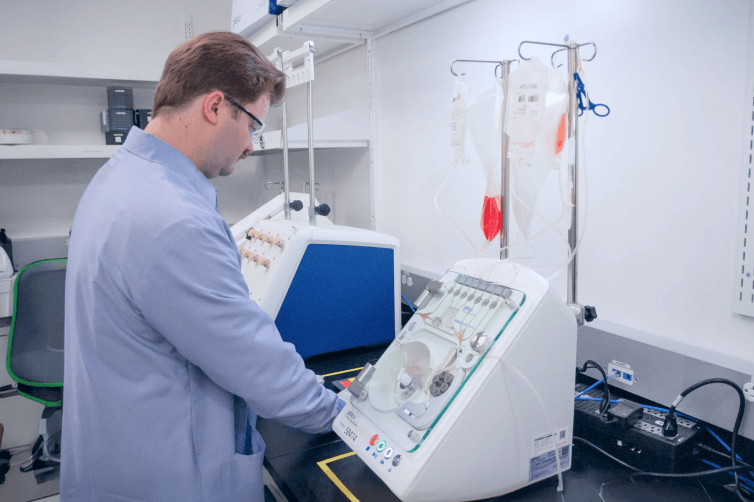
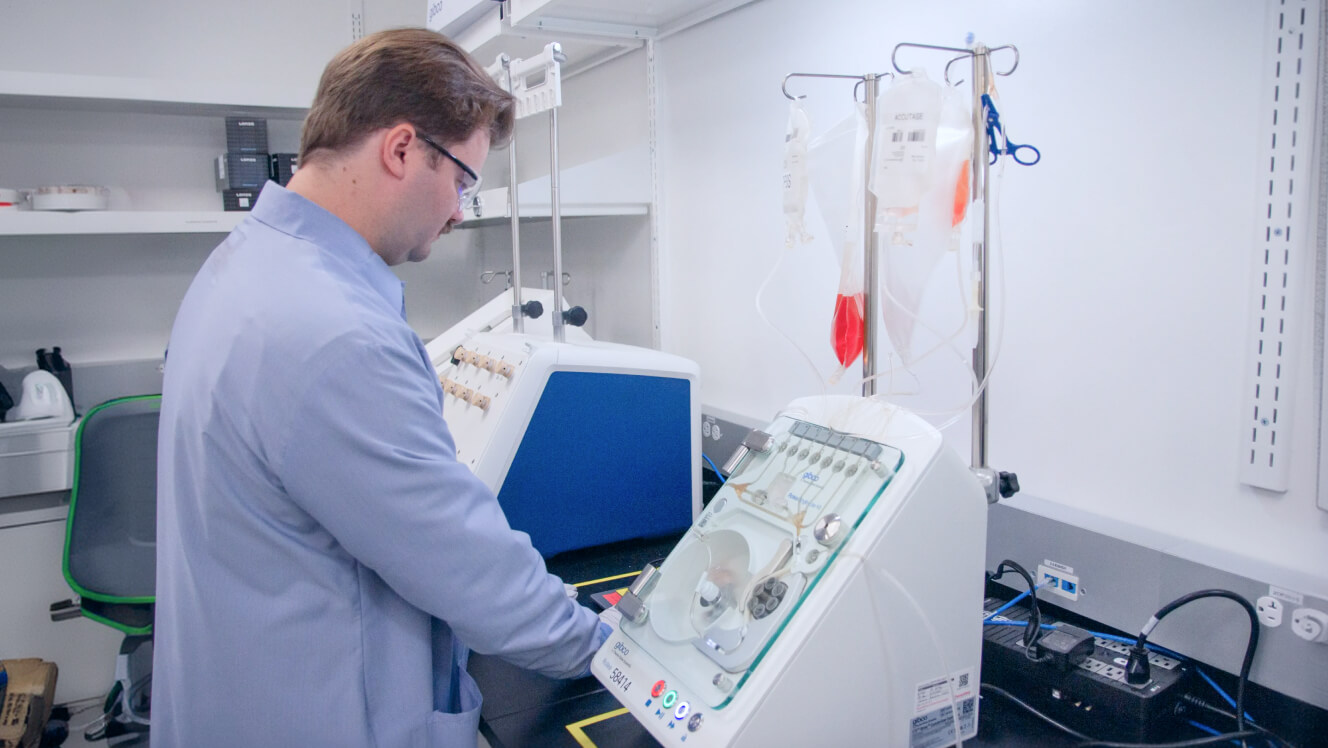
Integration of automated, functionally closed platforms to reduce contamination risk, improve batch-to-batch reproducibility, and lower operator burden. Platform selection is informed by published case studies, vendor performance data, and our internal experience with closed-system performance across modalities. We characterize each automated unit operation at the edges of its operating range — flow rates, sensor accuracy, single-use consumable tolerances — to ensure robustness under real manufacturing conditions. In-process sensors (pH, DO, biomass, metabolites) and inline sampling strategies are designed in from the start, enabling real-time process monitoring, tighter control, and a smoother path to continuous verification.
Once the process is characterized and optimized, we lock it and execute confirmation runs that generate the data package needed for GMP readiness — with the analytical control strategy deployed as it will run at the manufacturing site.

OUR EXPERTISE
Wide-Ranging Modality Expertise
Cell Types
- Primary cells (T, NK, Myeloid, etc.)
- Stem & progenitor cells (HSC, PSC, MSC, etc.)
- Specialized cells (differentiated stem cells, primary therapeutic cells)
Product architecture
- Autologous
- Adherent
- Scale-up
- Allogeneic
- Suspension
- Scale-out
Engineering Capabilities
- Gene editing
- Viral delivery
- Non-viral delivery
- Cellular reprogramming